Jambiani at a glance
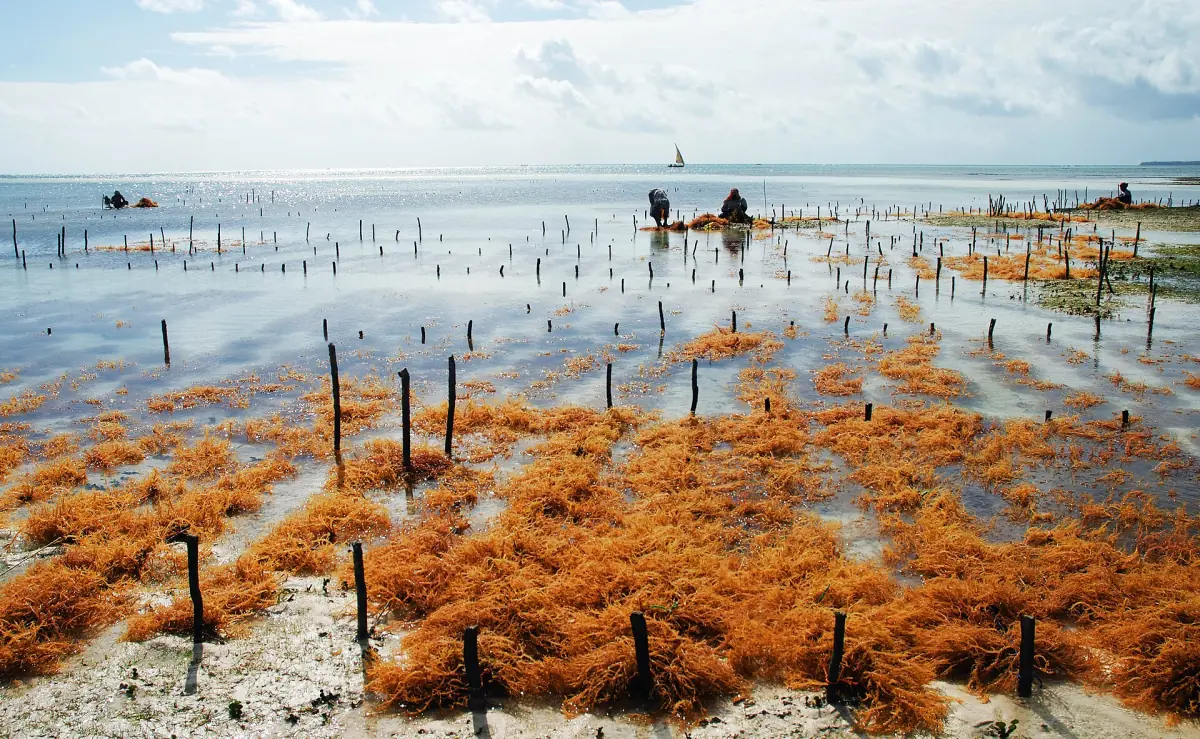
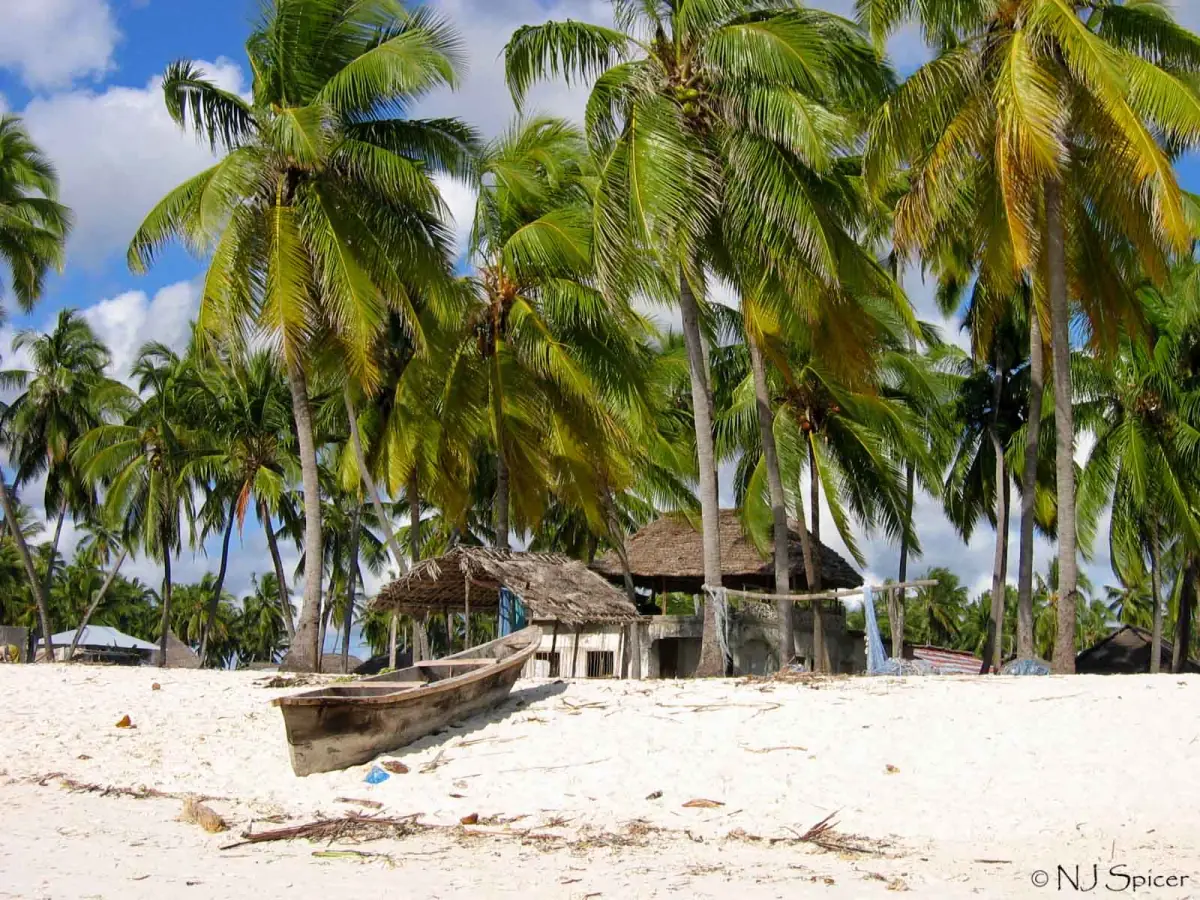
Jambiani is a village strung along the south east coast of Unguja, south of Paje. The beach is wide, and the sea behind it moves a long way with the tide. At high water you can swim off the sand. At low water the reef and lagoon flats open up and people walk out across them.
Because the coast is quiet, many visitors pair a few days here with a boat day. See our guide to Zanzibar snorkeling and dhow tours for the trips that suit this side of the island.
Seaweed farms in Jambiani
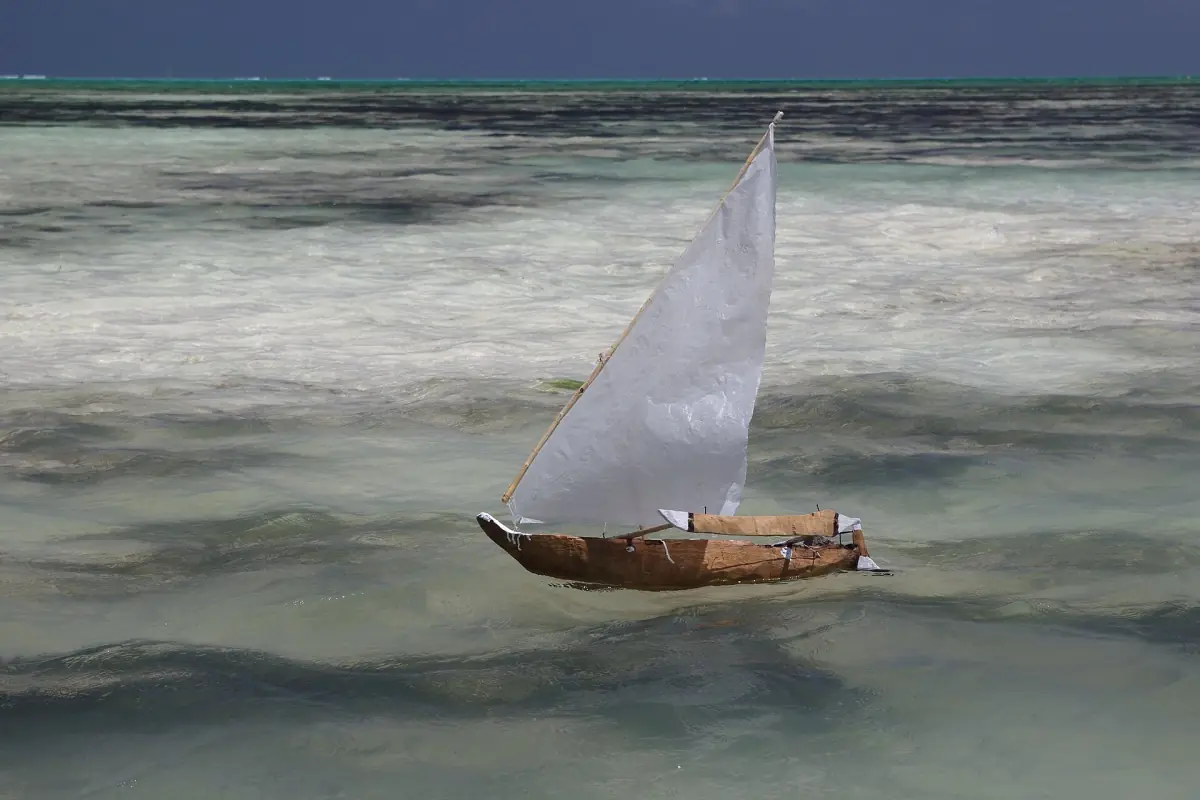
The lines and poles you see in the shallows at low tide are seaweed farms. Commercial seaweed farming started on Zanzibar's east coast in 1989, and women have carried much of the work. That is a historical description, not a current head count.
The farms are working areas, and they are not open to wander through. Seaweed is cultivated on lines in the shallows and handled at low tide. Please do not walk across the lines, and ask before you photograph people at work. Seaweed grown on a farm is also not the same thing as plant material that washes up on the beach. How much washes ashore on any given beach and week changes, so there is no fixed schedule to plan around.
If you want to learn how seaweed becomes a product, the nearest place for that is a studio in Paje. It offers a 90-minute tour from $15 (2026), with a farm visit as an option rather than a guarantee. Booking ahead is recommended. Read more in our Paje guide.
Our pick: boat snorkeling and starfish
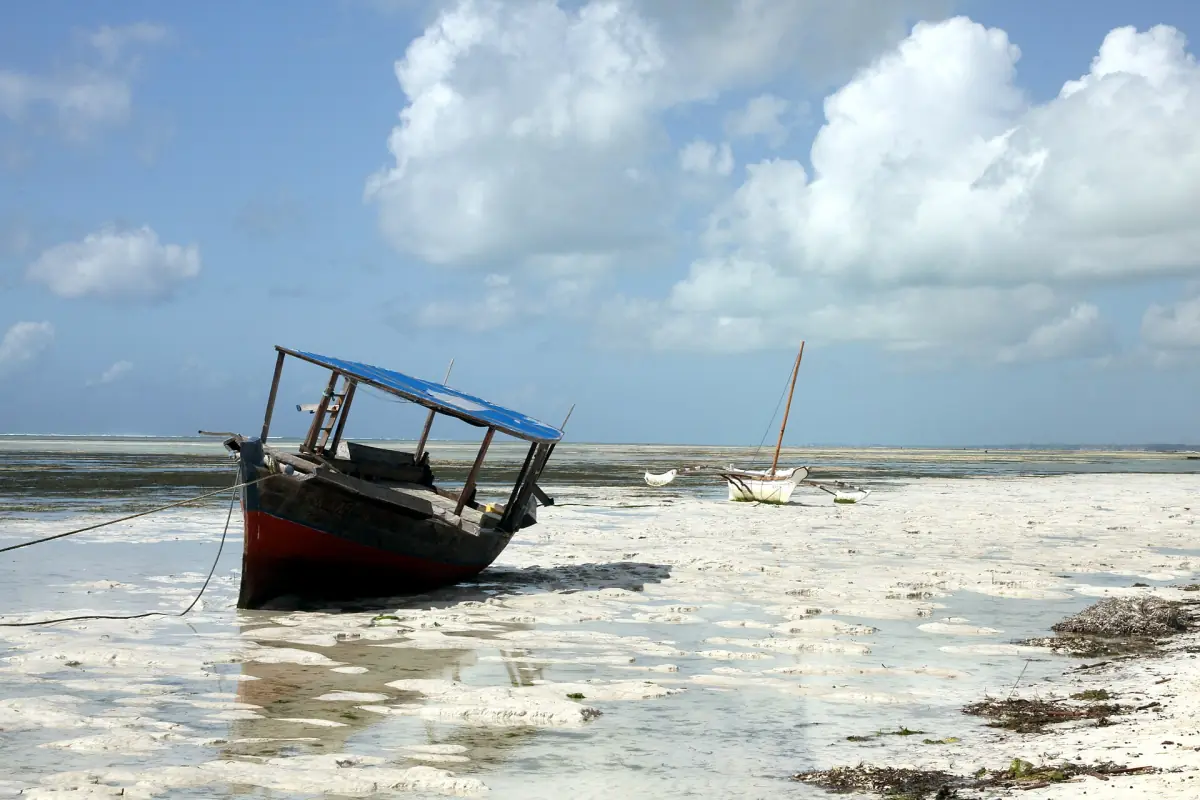
A traditional boat from Jambiani to the sandbank suits a short half day on the water.
Hand-picked tours, booked through GetYourGuide. Prices are indicative starting prices in US dollars (as of October 2026). Tap a tour for live availability and the current price in your currency.
Boat trips and tours from the south east coast
Dhow trips, reef snorkeling, forest walks and island days you can book from the Jambiani area, with live prices and availability.
Tides and swimming
Everything on this coast runs on the tide. Wide reef and lagoon flats dry out at low water, so the beach in front of you can be a swimming spot in the morning and a walking path in the afternoon. Look up the tide table before you plan a swim, a walk or a boat departure.
Low water brings sea urchins into reach of your feet. Wear reef shoes if you walk across the flats. Not every stretch of beach suits swimming at all hours, so ask your host about the current local conditions, and note that the German Foreign Office advises against walking on Zanzibar's beaches at night.
If you walk out across the flats, keep an eye on the incoming water and head back before it returns. Bring a hat, sun protection and drinking water, because there is little shade out on the sand.
Planning a stay on this coast
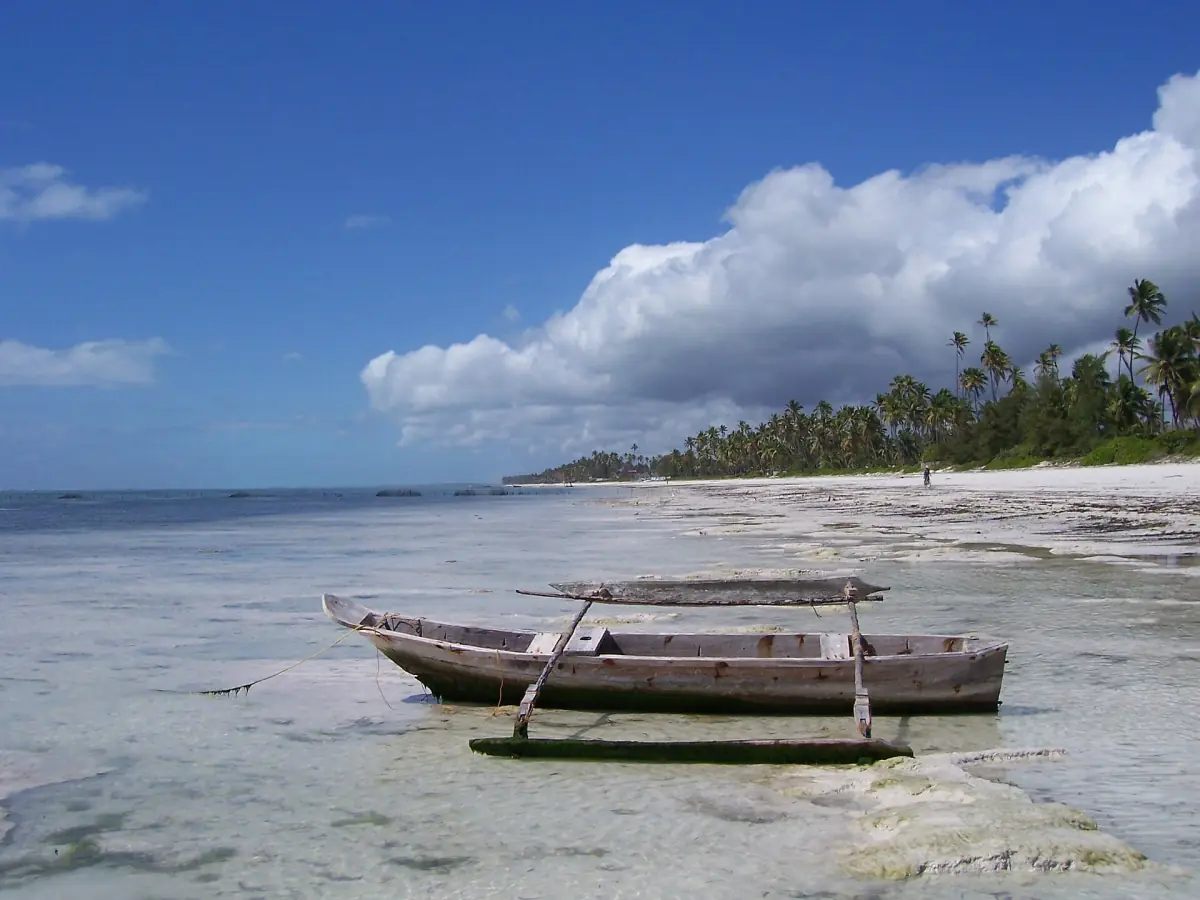
The practical points in one place.
Getting here
An airport taxi to Jambiani costs $65 per car, one way, or TZS 173,000 (2026). The price is for the car with up to 7 passengers. See our airport guide for how transfers work.
Money
The currency is the Tanzanian shilling. Tourists may pay in foreign currency. Carry some small shilling notes for local shops and shared transport.
Accommodation levy
Lodging charges a daily infrastructure levy per person. It is $5 for 4 and 5 star places, $4 for 2 and 3 star places and $2 for the rest, and some places charge as little as $1. Ask whether your booking includes it.
Plastic bags
Single-use plastic carrier bags are banned in Zanzibar. Small clear reusable bags, such as those for toiletries, are an exception.
Season
June to September is the drier part of the year, March to May brings the long rains and October to December the short rains. Our best time to visit guide explains the seasons.
Plan the rest of your trip
Neighbouring coasts and practical pages.
Jambiani: frequently asked questions
Can you visit the seaweed farms in Jambiani?
The farms are working areas and not an open sight. A seaweed studio in Paje runs a tour of about 90 minutes from $15 (2026), and a farm visit may be part of it but is not guaranteed.
Can you swim at Jambiani at low tide?
At low water the reef and lagoon flats lie open, so swimming is easier at higher water. Check the tide table and local conditions each day.
When does seaweed wash up on the beach?
There is no fixed season to count on. Farmed seaweed and plant material that washes ashore are different things, and the amount on any beach changes.
How much is a taxi from the airport to Jambiani?
An airport taxi costs $65 per car, one way, for up to 7 passengers (2026). The price is per car, not per person.
What should I bring for a walk across the flats?
Reef shoes because of the sea urchins, a hat, sun protection and drinking water. Watch the incoming water and head back before it returns.